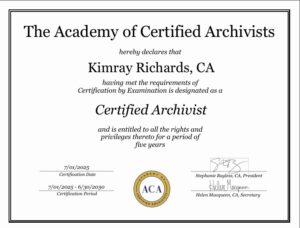

As a practitioner in the field of information management for a number of years and I have either in been employed to, or been indirectly associated with a wide variety of instituitions of variying sizes and purposes. These include of a number of nonprofit organizations both in the Chicago where I am now based, and Jamaica where I spent a large majority of my working life. I have found that the quality of the records management praticed by nonprofits in both places while they are different jurisdictions still face the same types of challenges of efficiency and effectiveness of control mechanisms. My intention in writing this article is to point out the obligations under the laws of the United States and Jamaica that nonprofits must adhere to. I will also show simple best practices that can upgrade struggling nonprofits records management programs into strong viable systems that can help to further their goals and make them audit and compliance ready .
An important point to start off with, is the fact that the nonprofit sector is a very heavily regulated segment of business activity in both the United States and Jamaica. Both countries have legislation that govern how they are formed and their status in law. One important factor rings true and this is the fact the authorities in both countries place stringent rules and consequences for not practicing good records management and reporting, failure to adhere to this, could have very serious consequences.
Legislative oversight of charities and their obligations to manage records under the law
In the US, nonprofits seeking tax exempt status are governed under the Internal Revenue Code (IRC) 501(c)(3) which covers most public charities, churches and educational organizations. This statute requires certain documents to be kept permanently and others to be disposed of records.
In Jamaica, the main piece of legislation giving oversight of nonprofits and charitable organizations is the Charities Act 2013. Several different GOJ agencies and ministries monitor various aspects of the activities of nonprofits. For the purposes of the article we will look at selected aspects of the act notably Section 27, that requires “A registered charitable organization to keep written financial records that- (a) correctly record and explain its transactions and financial position and performance; and (b) enable true and fair financial statements to be prepared and to be audited so as to enable any recognised assessment activity to be carried out in relation to the charitable organization. (2) A registered charitable organization shall keep and maintain its books, documents and other records in the manner and for the period required of taxpayers under the Revenue Administration Act, and the provisions of that act shall apply in relation thereto.”
The main outtake from both sets of legislations is that charitable organizations and nonprofits must have their records in order and they must be kept in a way that allows them to be audited when required under the law to do so. It must also be noted that duty to keep proper records are not only mandated by governments, they are often required to so by grant funding organizations which is usually enshrined in a Memorandum of Understanding or other binding agreements.
Common issues that stand in the way of good records management in Nonprofits.
My observations after years in this field reveal a number problems that continuously plague nonprofits in their pursuit of compliance. I will start with an example before I get into my list.
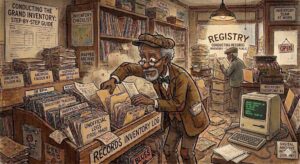
The leadership of one small nonprofit which shall remain anonymous asked me to help because: “we can’t find documents when funders ask for them”. Suffice to say that in my initial searches I found, that different members of staff and volunteers “kept their own files” which I dear say lead to a lack of intellectual control of the files. Needless to say the records manager had no clue as to how the files dealt with by these staff members were disposed of when their initial purpose was completed and this perisistently lead to absolute chaos in the organization when auditors came calling. The problem of course was solved by me by completing a records inventory and quickly established a simple RIM policy and trained up staff in managing records in a matter of weeks.
Below is list of other common issues in weak records management systems in nonprofits.
- Policies that are often on paper but lack ownership, in short many nonprofits often on paper delegate the records management to someone but do not in practice, assign records manager or person specifically with the powers, duties and authority to manage their records.
- Insufficient training and ongoing support for staff and volunteers so even good systems if not updated and maintained over time will fall apart.
- Underinvestments in back-office infrastructure (IT, Accounting, records storage and management systems) which sometimes leave programs wanting in terms of quility of the records that are produced for auditing and compliance.
Consequences for poor records management in non profits
- Fines and penalities that may even be on a per day basis that can reach thousands of dollars per day for missing or inaccurate filings.
- Loss of tax-exempt status.
- Bars from further fundraising and soliciting donations.
- Loss of eligibility for grant funding and government contracts.
- Costly remediation projects to rebuild books and records which often diverts staff attention form progrm activities.
- Loss of credibilty and bad Public Relations and bad image if impropriety is publicized.
- Personal liabilty by offenders.
- Duplicated records and poor strategic decisons based on faulty data.
Avoid pitfalls in this way
- Create a comprehensive document retention and destruction policy.
- Do a simple records Inventory.
- Assign clear ownership of the compliance/ records management function to at least one volunteer and staff member and update and retrain them at least yearly.
- Classify and organize both digital and non digital records .
- Adopt technological tools that have built in records retention automation features.
- Scedule regular reviews to purge expired records and update policies and test for audit readiness