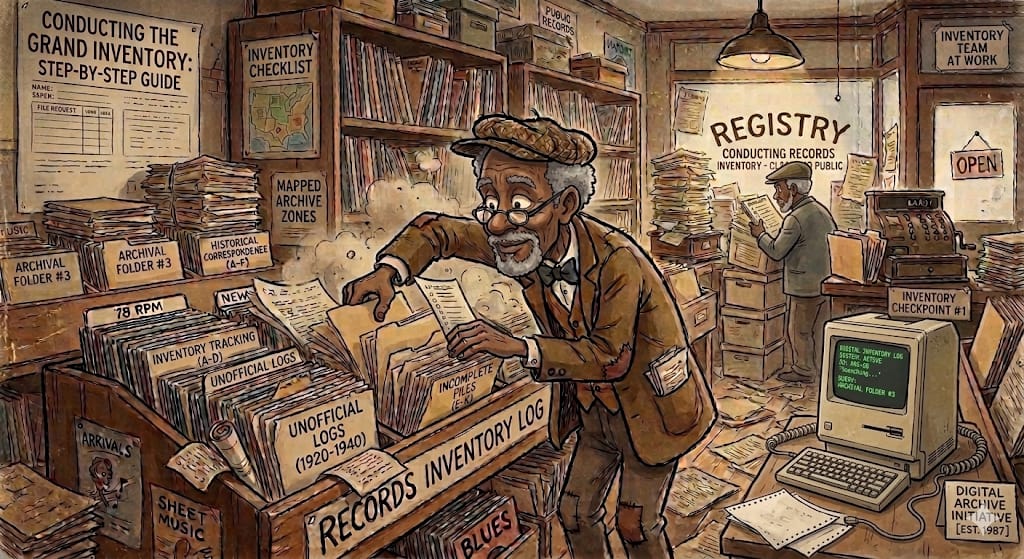
As a practitioner in this field, over the years I have been tasked with the job of doing a records audit of many organization’s records. At this point I am not often surprised by what I often find after my initial view of the records management landscape, I often sit in my office and sip a wonderful brew of coffee and wonder where to start when issues were challenging and numerous. There were many routes that can be taken by me at times, but I realize that doing a full and complete records inventory of the records held by an organization is often, the only way to get a good understanding of what is truly going on.
What Many Records Inventories Often Reveal
My audits often reveal massive data fragmentation, in short while there are often central registries or even decentralized ones too, there often still exists, many information silos within organizations. Data is often be scattered across shared drives, emails, boxes, even individual desks, different branches
I often also find a lot of duplicate fragmented and incomplete files which often clutter the system and this includes many digital files started and incomplete paper file folders and records too (yes I said it). I often find that when a file cannot be immediately be found attempts are often made by staff to recreate files.
Lack of Expertise I often also find that while they may be well intentioned, are often incomplete or in my opinion poor prior attempts to inventory the organizational records due to lack of expertise. Staff are often untrained in how to properly conduct one and impliment fixes.
I have often found furious resistance to change by many business process owners and who have had the “if it ain’t broke don’t fix” it attitude to change archaic beliefs that the records they have in their business unit are theirs, and theirs only as such, conducting a records audit and attempting to change their legacy practices is an attempt to undermine them.
I often find records both digital and paper in very awkward places including shadow collections within organizations which have lead to awkward and often serious questions about the treatment and understanding of proper management of records by stewards within organizations. These sometimes are important files on desks or under it (yes I said it) Sometimes, improper storage procedures and disposal of dead or malfunctioning CPU and hard drives containing important data.
What To Do About This
Get an expert in fixing these issues like these check my website at krfortherecord.com
If you choose to stay in house you can do the following:
- Move to a “single source of truth” which could take the form of a single repository with a professional records manager with sufficient executive authoritzation to control and understand your data and information management needs.
- Rationalize your applications stack by limiting redundant tools, retiring systems and processes that cannot be integrated into your new post inventory records and information governance plan.
- Design taxonomies and retention rules that support multiple use cases(finance, development, programs) instead of creating silos that serve only one department’s needs
- Conduct regular data audits that catch duplicates, conflicts and shadow collections before they harden into silos.
While there are more options feel free to contact me at my website for more information and assistance