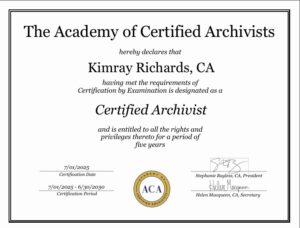

As a practitioner in the field of records and information management, I have found that many individuals have an unfounded belief that creating a retention schedule is a difficult task. It is actually much simpler than you may think and does not always require fancy and expensive software or special IT skills.This holds true particularly for middle to smaller sized companies, institutions and individuals.
Here is my simple, compliant and doable retention schedule that I have developed over the years. Believe it or not this can all be done up in just a few minutes!
- Brainstorm and write down the main record types used in your business, you can start with the big bucket ones that most businesses use such as Finance, HR, Legal and Project Files and add custom categories you deem neccsessary.
- Create a simple table structure with items that may include Record Category, Retention Period, Final Action and Notes.
- Ensure you adjust periods where you know specific statutory rules apply and mention them in your schedule where practicable.
Note these three critical rules below may apply to most Record Retention Schedules.
- The retention schedule applies to both paper and electronic records.
- There should be a period of review written into the schedule.
- If litigation or audit investigation is reasonably anticpated, suspension of disposition of records is to be suspended.
I have found these simple rules over the years, really do work for smaller business and less complex operations but of course, you will find that larger business with more risk exposure will have far more elaborate rules and structure. Truth be told, most, if not all effective retention schedules will require either the buy in of your board or at least senior executive management and incorporation into a wider information management policy.